

Basement excavation cost in Indiana depends on the size and depth of the hole, the soil and water underneath, how the machines get in and where the dirt goes afterwards. There is no honest flat price, so this guide explains what moves the number and On Grade prices each dig after looking at the lot.
Why this page has no price list
Search for basement excavation cost and you will find tidy ranges. They are averages of jobs that are not yours. Two basements with the same footprint can be very different digs once you account for the ground, the water, the access and the spoil.
So this guide does not list dollar figures. It walks through what actually changes the number, so that when you get a quote you know what you are paying for and can compare two quotes on the same terms. If one contractor has allowed for hauling spoil and pumping water and another has not, the lower looking number may be the one that grows. Ask each one what they assumed.
Size, depth and working room
The obvious driver is volume: footprint times depth. Less obvious is the working room. A basement is dug larger than the wall line so the crew can set forms, waterproof the outside of the wall and lay drain tile at the footing. That extra width runs around the whole perimeter and adds up fast.
Depth is set from the finished grade on the plans, not from the ground today. On a lot being raised with fill the hole may be shallower than expected. On a lot sitting high, it may be deeper. A walkout basement on a slope changes the shape entirely, with one side cut deep and the other open to daylight. Send the plans and the floor elevation and the volume can be worked out properly.
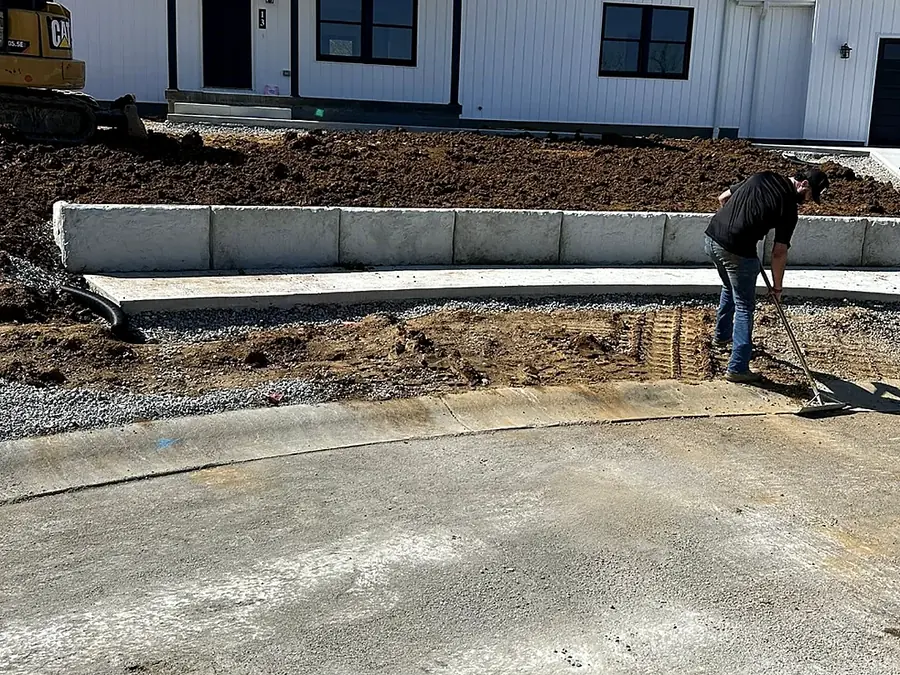
The soil and what sits under it
Most of central Indiana is clay-rich glacial till. It digs steadily, stands up reasonably well in a dry spell and turns sticky and slow when wet. Pockets of sand, old fill, buried debris or rock change the pace and can change the method needed to keep the walls of the hole safe under OSHA trenching rules.
You can check the mapped soils for your lot on the NRCS Web Soil Survey before anybody prices the job. Where an engineer or the building department asks for a soils report, its findings set what the bottom must look like. A soft bottom that has to be dug out and replaced with stone is one of the most common reasons a basement costs more than first expected.
Water: the line item nobody wants
Clay ground in Indiana holds water, and low ground holds the most. Brookston soils in the swales can sit wet for much of the spring. A basement hole in that ground collects rain and seepage, and the water has to be pumped out or given a route to leave before footings go in.
Season matters here. A dig in a dry late summer often runs straight through. The same dig in a wet March can lose days to standing water and soft bearing soil. Old field tile cut by the excavation adds water and has to be repaired or rerouted. None of this is predictable to the hour, which is why a quote should say how water and tile will be handled.
Where the dirt goes
A basement produces a lot of spoil, and what happens to it is often the biggest single swing in the price. Some of it goes back as backfill against the walls. Some can be spread to raise the yard around the house so the final grade falls away from the foundation. Topsoil gets stockpiled separately for finish grading.
Whatever is left has to be hauled, and trucking is time and fuel. A lot with room to keep and use the material on site costs less to dig than a tight lot where every bucket goes on a truck. Planning the spoil with the grading plan, rather than after, is how the dirt gets handled once instead of twice.
Access, clearing and the lot itself
How the machine and the trucks get in changes how the job runs. A wide, firm entrance close to the hole is quick. A narrow gate, a soft field, a steep approach or trees in the way slows every load. On a wooded lot the house site has to be cleared and the stumps taken out before the basement can be dug, and that is a job in its own right.
Permits and locates sit around all of this. The county or town building department issues the permit, Indiana 811 needs at least two full working days' notice, and a build that is part of a larger development may fall under IDEM's construction stormwater permit. Confirm each with the office that covers your address.
How to get a real number
Send the address, the plans or at least the footprint and basement type, and roughly when the concrete crew is booked. Photographs of the lot and the way in help. Then Travis will look at the ground, check the soil and the water, and work out where the spoil can go.
On Grade LLC digs basements and foundations out of Greencastle across Putnam County, Indiana, Hendricks and Boone counties and the west side of Indianapolis. Estimates are free. Read how the dig itself runs in our foundation excavation guide, see our foundation and basement services, or call or text Travis at (317) 203-8928 to book a site visit.
The Short Version
- Basement cost is driven by volume, working room, soil, water, spoil and access, not a flat rate.
- Ask every contractor what they assumed about water, soft bottoms and hauling.
- Keeping spoil on site for backfill and grading usually costs less than trucking it away.
- Check your lot's mapped soils on the NRCS Web Soil Survey before pricing.
- Confirm the permit with your county or town building department and call Indiana 811 first.
Quick Answers
Why do two basement quotes for the same house differ so much?
Usually because they assumed different things about water, soft ground and where the spoil goes. Ask each contractor to say how they will handle pumping, unsuitable bottom soil and hauling, then compare.
Does a walkout basement cost less to dig than a full basement?
It depends on the slope. A walkout cuts deep on one side and opens to daylight on the other, so the volume and spoil can be quite different. The lot decides, which is why it needs a look.
Does the time of year change what a basement dig costs?
It can. Wet spring ground in central Indiana holds water and goes soft, which slows the dig and can mean pumping or extra stone. A dry spell usually runs faster.
Can the dirt from my basement stay on my lot?
Often, yes. Spoil can go back as backfill and be used to raise the grade around the house, with topsoil kept for finish grading. What cannot be used has to be hauled.
See the excavation & foundations service or call (317) 203-8928.