

Forestry mulching grinds brush and small trees into chip and leaves the roots in the ground, while full land clearing removes trees, stumps and roots so the ground can carry a building, drive or lawn. Choose by what the ground will be used for, and many Indiana properties need both on different parts of the same lot.
What forestry mulching does
A forestry mulcher is a machine with a rotating cutting head that grinds standing brush, briars, saplings and small trees where they stand. The material is left on the ground as a layer of chip. There is no pile to burn and nothing to haul.
The chip layer protects bare soil from rain and helps hold a slope in place, which matters on the clay soils across central Indiana. The ground is barely disturbed, because the roots and the soil stay where they were. That makes mulching a good fit for opening up overgrown pasture, fence rows, trails, sight lines and woods that are being thinned rather than removed. See our forestry mulching in Putnam and Hendricks County page for the service.
What full land clearing does
Full clearing takes the trees down, pulls the stumps and grubs out the root mat. The holes are then filled and compacted and the ground is left ready for stripping, grading and building. It moves far more soil than mulching and produces more material to handle.
Because stumps are dug, full clearing is excavation. Indiana 811 needs at least two full working days' notice before it starts. The cleared wood has to be chipped, hauled or, with IDEM's prior approval for land clearing, burned. Our land clearing and forestry mulching service covers both methods, so the method can change line by line across the same property.
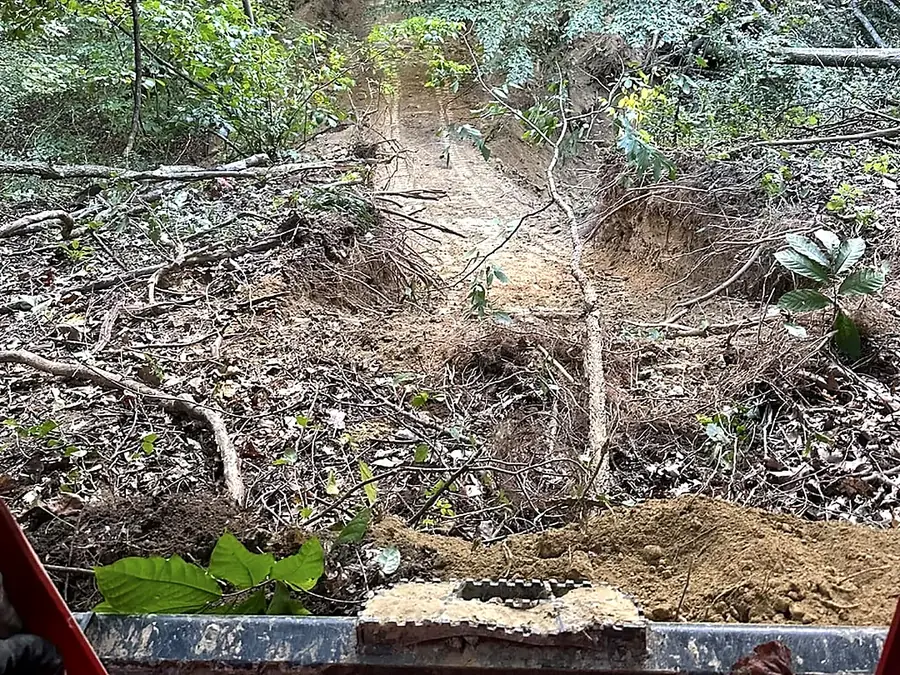
When mulching is the right call
Mulching fits ground that will stay as ground. Pasture that has gone back to brush, a woodlot being opened up, a trail or hunting lane, a fence line that needs reclaiming and a view that has grown in are all mulching jobs. So are steep or erodible areas where you want the soil held rather than stripped.
It is also the gentler choice near trees you want to keep, because it does not dig into the root zone. The trade is that roots stay alive, so some species will send up new shoots. Plan on mowing or another follow-up pass on anything that regrows, rather than expecting one visit to end it for good.
When the roots have to come out
Anything that will carry weight or be finished needs full clearing. That means a house, a pole barn, a garage, a drive, a parking area and any lawn you want to mow smoothly. Roots and buried wood rot over time and the ground above them settles, which cracks slabs and dips drives.
Ponds, utility trenches and drainage ditches also need roots removed along their line. Mulching a build site and building on it is one of the most common and expensive shortcuts there is. If you are not sure what you will build yet, mulch now and plan to grub the pad later rather than the other way round. Our guide to building on a wooded lot covers the full sequence.
Most properties need some of each
On a typical rural lot in Putnam County, Indiana, the answer is rarely all one or all the other. The house pad, drive and yard get fully cleared. The woods behind the house get mulched to open them up. The fence line gets mulched. The creek bank stays as it is.
Marking those areas on the ground before work starts is what keeps the job honest. It also keeps the price sensible, because full clearing takes more time and produces more material than mulching. Our land clearing cost guide explains how each choice moves the number.
Soil, water and the rules either way
Mulching leaves a protective layer on the ground. Full clearing leaves bare soil, and bare clay in central Indiana sheds water and sediment in the first hard rain. Cleared ground should be graded so water leaves it in a controlled way and should be seeded and strawed or built on promptly.
If the disturbance reaches an acre or more, or is part of a larger common plan of development, IDEM's Construction Stormwater General Permit applies. Near creeks, check the Indiana DNR Division of Water Floodplain Portal first. Confirm the rules for your property with IDEM, Indiana DNR and your county office before work starts.
Get the method matched to the ground
The quickest way to know which method you need is to walk the property with the person doing the work. On Grade LLC mulches and clears land across Putnam County, Indiana, Hendricks and Boone counties out of Greencastle. Travis will mark which areas need full clearing, which can be mulched and how the material will be handled, then price it as one job. Bring a rough idea of what you want the land to do in five years, because that decides where the roots have to come out. To book a visit, call or text Travis at (317) 203-8928. Estimates are free.
The Short Version
- Mulching grinds growth to chip and leaves roots; full clearing removes stumps and roots.
- Mulch ground that stays as ground; fully clear anything that will carry weight or be mowed.
- Mulched ground can regrow, so plan a follow-up pass.
- Full clearing is digging, so Indiana 811 and stormwater rules apply.
- Most lots use both methods on different areas.
Quick Answers
Will forestry mulching stop brush from growing back?
Not by itself. Mulching leaves the roots alive, so some brush and trees will resprout. A follow-up pass or regular mowing keeps it open.
Can I build a pole barn on ground that was only mulched?
Not without more work. The stumps and roots under the barn pad need to come out and the holes need to be filled and compacted, or the pad will settle as the wood rots.
Does forestry mulching need an Indiana 811 call?
Ask Indiana 811 about your job. Grubbing stumps is digging and needs at least two full working days' notice. Mulching works at the surface, but buried lines near the surface are still worth locating first.
Is mulching better for slopes than full clearing?
Usually, if the slope will stay wooded or grassed. The chip layer protects the soil and the roots hold it. Full clearing on a slope leaves bare ground that needs fast erosion control.
See the forestry mulching service or call (317) 203-8928.