

Removing concrete means breaking it out, sorting it, and either reusing it on site or hauling it to a place allowed to take it. The price depends on how thick and how reinforced it is, how easy it is to reach, and where the broken concrete ends up.
What concrete removal covers
Most removal jobs are one of a handful of things: an old patio that has heaved, a cracked garage or shop floor, a driveway or apron that is being replaced, a sidewalk, steps, an old barn pad, or footings left in the ground from a building that is long gone. Each one is broken up with a machine, lifted out and loaded.
The job is rarely only about the concrete. Something is going in its place, a new pour, a stone pad, a lawn or a building, and the ground under the old slab has to be fit for it. Planning the removal and the next step together saves a second trip and a second bill, and it means the base can be shaped while the machine is already on site.
What moves the price of removing concrete
This guide gives no dollar figures, because two slabs of the same size can be very different jobs. Thickness comes first: a patio and a shop floor built for trucks break very differently. Reinforcement is next. Rebar and wire mesh slow the breaking and have to be cut and separated.
Access is the third. A drive at the road is easy to reach. A patio behind a house, past a fence and across soft lawn, is not. The fourth is disposal, which is often the largest share: how far the concrete travels and whether it can stay on site. After that come buried lines near the work, what sits under the slab, and whether the ground needs grading, a new base or seed when the concrete is gone.
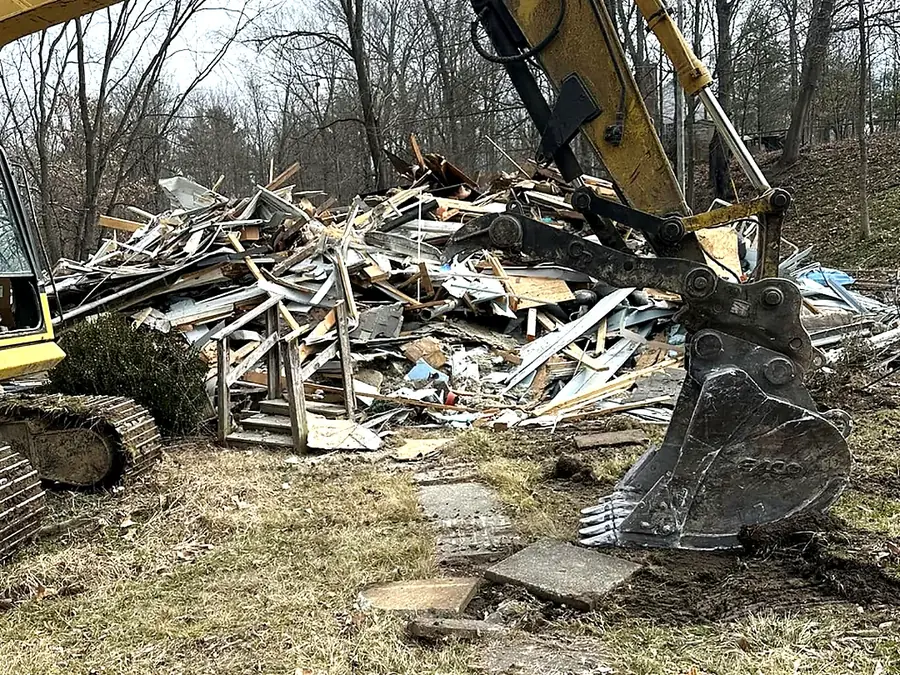
Where the broken concrete can go in Indiana
Indiana's Department of Environmental Management treats clean fill as only uncontaminated, unpainted concrete, brick, road materials, rock and dirt. Concrete that meets that description is not handled as solid waste, which is why clean broken concrete can often be reused as fill or crushed into base rather than hauled to a landfill.
There are limits. Painted or contaminated concrete is not clean fill. IDEM notes that grinding or crushing can need an air permit, that fill placed in a wetland or floodway brings in other rules and can need a DNR construction in a floodway permit, and that local permits may apply. Mixed loads go to a permitted facility, and open dumping and open burning are not allowed. Ask IDEM and your county about your own site before planning to bury anything.
Before the breaker starts: lines, permits and neighbours
Gas, water, electric and communications lines often run under or right beside old slabs, drives and walks, so the job starts with an Indiana 811 locate, at least two full working days ahead. Private lines, such as power to a garage light or a line to an outbuilding, are not marked by 811, so say where they run.
A driveway apron or sidewalk at the street usually sits in the road right of way. On a county road, ask the county highway department. In a town, ask the town office that looks after its streets. On a state highway, INDOT handles driveway permits through its online permit system. Confirm with the office for your road before the old apron comes out.
What is left when the concrete is gone
Ground that has been under a slab for years is often soft, wet or full of old fill. Before anything new goes on it, that ground needs a look. Soft spots are dug out and replaced with stone rather than covered over, and the area is compacted so the next slab does not crack in the same place the last one did.
If the area is going back to lawn, it needs topsoil, a shape that sends water away from the house, and seed and straw. If a new slab is going in, the stone base is graded and compacted to the right depth so the pour comes out the thickness it was priced at. Either way, the site should be left clean of rebar, chunks and ruts.
Why have On Grade price the removal
Concrete removal is priced well only by someone who has seen the slab, the way in and the ground around it. On Grade LLC breaks out old concrete and builds what replaces it as part of its concrete preparation work, so the removal and the new base are one job.
If the space is turning into a shop or barn floor, see building pad and pole barn pad preparation. If it is going back to grass, finish grading and seeding closes it out. Every job starts with an Indiana 811 locate. Call (317) 203-8928 and Travis will come out, look at the concrete and give you a number.
The Short Version
- Thickness, reinforcement, access and disposal are what move the price of concrete removal.
- IDEM treats only uncontaminated, unpainted concrete as clean fill, and local or floodway permits can still apply.
- Call Indiana 811 before breaking out a slab, drive or walk.
- An apron or sidewalk at the street usually sits in the road right of way, so ask the road authority first.
- Plan the removal and the next step together so the base is ready in one visit.
Quick Answers
Can broken concrete be reused as fill on my property in Indiana?
Often, if it is clean. IDEM describes clean fill as uncontaminated, unpainted concrete, brick, rock and dirt. Floodways, wetlands and local rules can still require a permit, so check with IDEM and your county first.
What makes concrete removal cost more?
Thick or heavily reinforced concrete, tight access behind a house, long haul distances, buried lines close by, and soft ground under the slab that needs digging out and rebuilding.
Do I need to call 811 before removing a concrete patio or drive?
Yes. Breaking out a slab disturbs the ground, and lines often run beneath or beside it. Contact Indiana 811 at least two full working days before the work.
Can On Grade remove concrete and prep the base for a new slab?
Yes. On Grade LLC breaks out old concrete and builds the stone base for the next pour across Putnam County, Indiana, Hendricks County and the west side of Indianapolis. Call (317) 203-8928.
See the concrete prep & demolition service or call (317) 203-8928.