

For a driveway in Indiana, use crushed stone, a coarser graded base stone with fines that packs and locks, topped with a smaller graded surface stone, not round river gravel or pea gravel that rolls under tires. On wet clay ground the layers go over a firm, drained subgrade, often with fabric underneath.
Crushed stone, not round gravel
The word gravel covers two very different materials. Crushed stone comes from a quarry, broken into pieces with sharp, angular faces. Round gravel, including pea gravel and river rock, has smooth faces worn by water. On a driveway, the difference is everything.
Angular pieces wedge against each other and lock when they are compacted, so the surface stays firm under a loaded truck. Rounded pieces roll over each other like marbles, so tires sink in, the stone spreads to the edges and the drive ruts. Round gravel has its uses in landscaping and drainage, but a drive that carries traffic is built from crushed stone. Putnam County, Indiana has been quarried for limestone for well over a century, and crushed limestone compacts well.
Base stone and surface stone
A lasting gravel drive is built in layers. The base is a larger crushed stone graded with fines, the small particles and dust left from crushing. Those fines fill the gaps between the larger pieces, and when the base is compacted it becomes a dense, solid layer that spreads the weight of a vehicle over the ground below.
The surface is a smaller crushed stone, also usually with fines, that compacts into a smoother, tighter top. Some owners prefer a clean surface stone for looks or less dust, but clean stone without fines does not bind as tightly and tends to move more under tires. The base does the structural work and the surface takes the wear. Skipping the base and spreading only surface stone is the most common reason a new drive fails.
Ask the quarry by name, not by look
Indiana quarries and stone yards sell stone by numbered sizes and their own product names, and the same size can go by different names at different yards. Pictures online rarely match what your local yard calls its stone.
The safest approach is to ask the yard or your contractor for two things: a compactable base stone with fines for driveways, and a surface stone with fines for the top layer. Ask whether the stone is crushed limestone, gravel or recycled material, and whether it is clean or has fines. A contractor who orders stone regularly knows which products from the nearby quarries pack well, which one is used on county roads, and which ones are hard to find or slow to deliver.
What goes under the stone matters as much
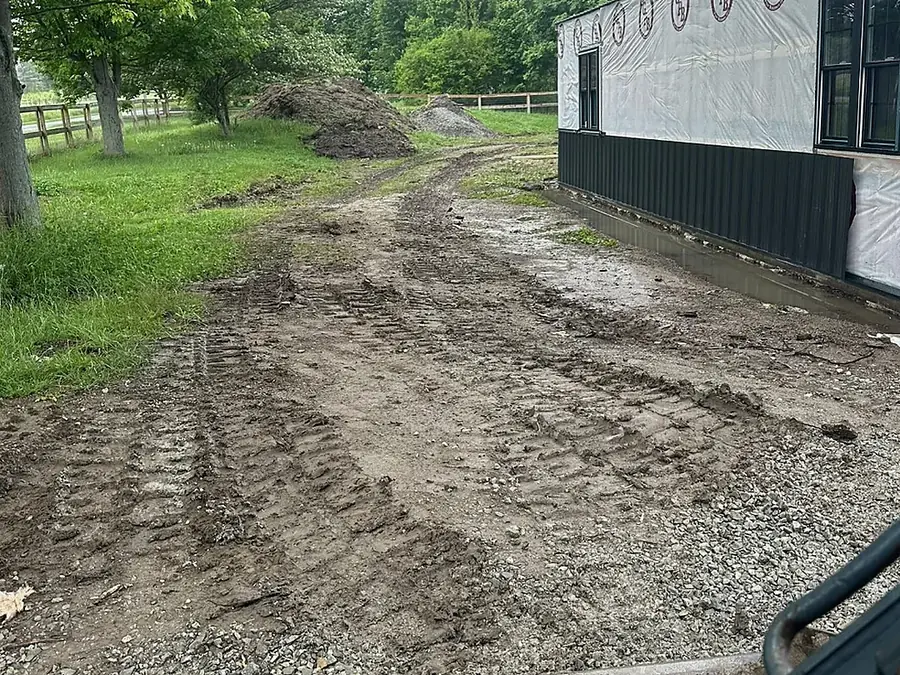
Stone placed on soft topsoil or wet clay will push down into it, and the clay will work up into the stone. Within a season or two the base is contaminated and the drive is soft again. A drive that lasts starts with the topsoil and soft material removed, down to firm ground.
On the clay soils common across central Indiana, a geotextile fabric between the subgrade and the base stone keeps the two apart. It does not replace a good base, but it stops the base from disappearing into the ground. The subgrade also needs shape: a crown or cross-fall so water leaves the drive, and ditches or swales alongside to carry it away. For what drives the price of all this, see our gravel driveway cost guide.
Stone for slopes, wet spots and heavy traffic
Steep drives wash out where water runs down the stone rather than off it. A stone with plenty of fines that compacts hard resists washing better than loose stone, but the real fix is getting water off the drive with a crown, a ditch and sometimes a culvert at the low point. Choosing a different stone will not stop a drive that carries a creek in every storm.
Wet spots that never firm up usually need a thicker base, sometimes a larger stone at the bottom, and drainage beneath or beside the drive. Drives that carry farm equipment, delivery trucks or construction traffic need a heavier base than a drive used by a car or two. All of this is decided on site, by looking at the ground and the traffic.
When the drive needs more than new stone
A rutted or potholed drive often already has plenty of stone, just not where it should be. Regrading pulls the stone back from the edges into the center, restores the crown and recompacts the surface, which often does more than another load would.
Where the base has been contaminated by mud from below, adding surface stone only buys a few months. The base has to be rebuilt, which can mean digging out the soft section, laying fabric and placing new base stone. Knowing which problem you have saves money. Our gravel driveway repair and regrading page covers how that work is done.
Why have On Grade build or rebuild your drive
On Grade LLC builds and repairs gravel drives out of Greencastle across Putnam County, Indiana, Hendricks County, Boone County and the west side of Indianapolis. Travis looks at the ground, the slope and where the water goes before choosing the stone, so the drive is built from the right materials in the right layers.
To get a number, call or text Travis at (317) 203-8928 with the address, the length of the drive, what drives on it and photographs of the worst sections. If it is a new drive, see driveway installation and finish grading. Estimates are free.
The Short Version
- Use angular crushed stone, not round pea gravel or river rock, for a drive that carries traffic.
- Build in layers: a compactable base stone with fines, then a smaller surface stone.
- Stone names vary by quarry, so ask for base and surface stone with fines by the yard's own names.
- Remove soft ground and use fabric on wet clay so the base does not sink.
- Water management matters more than stone choice on slopes and wet spots.
Quick Answers
Is pea gravel good for a driveway?
Not for the driving surface. Pea gravel is rounded, so it rolls under tires, spreads and ruts. Crushed stone with angular faces locks together and stays firm.
What is stone with fines, and why does a driveway need it?
Fines are the small particles and dust left from crushing stone. They fill the gaps between larger pieces, so the stone compacts into a solid layer instead of staying loose.
Should I use fabric under a gravel driveway in Indiana?
On the clay soils common across central Indiana, fabric between the subgrade and the base stone often helps. It keeps clay from working up into the stone and the stone from sinking into the clay.
What gravel should go on a driveway that keeps washing out?
A compactable stone with fines resists washing better than loose stone, but the main fix is drainage: a crown, a ditch alongside and a culvert where water crosses.
See the driveway repair service or call (317) 203-8928.