

It depends on the kind of ditch: a regulated drain is the county drainage board's responsibility, with the county surveyor as the technical authority; a roadside ditch belongs to whoever looks after the road; and a private or mutual drain is up to the landowners. Ask your county surveyor's office first, because that office keeps the records of the regulated drains in the county.
Three kinds of ditch, three different answers
Indiana's drainage law, Indiana Code 36-9-27, sorts drains into types. A regulated drain is an open ditch, a tiled drain or a combination of the two that falls under the drainage statute. A mutual drain runs across land owned by different people and was set up by agreement among the owners. A private drain sits on land owned by one person. Mutual and private drains are not governed by the drainage statute.
Roadside ditches are separate again. The ditch beside a county road is usually the county highway department's concern, the ditch beside a state highway or US route is INDOT's, and town streets belong to the town. The first job is finding out which kind runs past your property.
Regulated drains: the drainage board and the county surveyor
Every county has a drainage board. Under the statute it is either the board of commissioners itself or three or five people the commissioners appoint, with at least one commissioner among them. The county surveyor sits on the board as a nonvoting member.
The surveyor is the technical authority on the construction, reconstruction and maintenance of regulated drains, supervises the work and keeps the records: survey notes, plans and profiles for every regulated drain in the county. That makes the surveyor's office the place to ask whether a ditch or tile line on your land is regulated. In Putnam County, Indiana, Hendricks County and Boone County, ask the county surveyor's office whether your parcel touches a regulated drain and whether it is assessed for one.
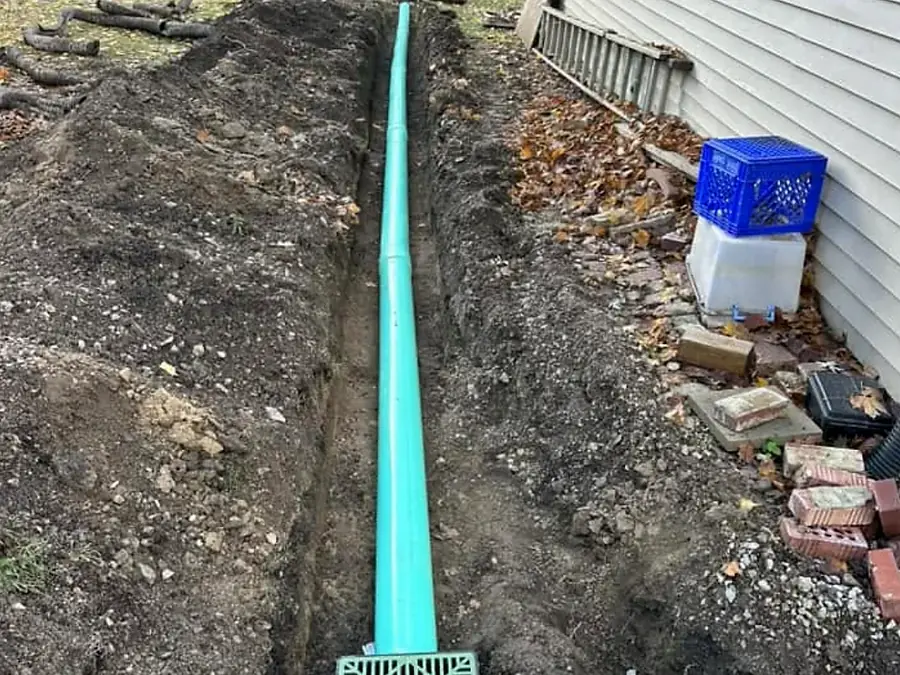
What a regulated drain means for your land
A regulated drain carries a right-of-way along it. The county surveyor and the drainage board have a right of entry over land along the drain to inspect and maintain it.
The statute also limits what owners may do in that strip. Permanent structures may not be placed on the right-of-way without the drainage board's written consent, and trees, shrubs and woody vegetation may not be planted there without it either. Temporary items can go in, but must come out when the board or surveyor orders it. Before you build a pole barn, a fence line, a pond or a new drive near a regulated drain, ask the surveyor's office how far the right-of-way reaches on your parcel.
When a neighbor's ditch or tile is blocked
Water backing up onto your land because of a blocked ditch or broken tile on someone else's land is one of the most common drainage disputes in rural Indiana. If the drain is regulated, report it to the county surveyor's office, which is responsible for its maintenance.
If it is a mutual or private drain, or a natural surface watercourse, Indiana Code 36-9-27.4 gives a route. Once the owner of the land where the blockage sits has been asked to remove it and has declined, the affected landowner may petition the drainage board in that county. The surveyor investigates and the board holds a hearing. Ask the surveyor's office how they handle it before you file anything.
Old field tile and private drains
Much of central Indiana was tiled for farming, and many of those lines are private: laid by an owner decades ago, unmapped and still carrying water from more than one field. When a subdivision or a new house goes on former farm ground, the tile often stays under it. A wet stripe across a lawn or a sinkhole along a straight line is often a broken tile.
Private tile is the owner's responsibility, and cutting one during construction without repairing it pushes water onto someone else. Indiana 811 does not mark field tile. If a tile might connect to a regulated drain, ask the surveyor's office before you change it. Our yard grading and drainage guide covers fixes on your own lot.
Road ditches, streams and floodways
The ditch along a public road and the culvert under your drive sit in the road right-of-way, so the county highway department or INDOT decides what can be done there. Our driveway culvert guide covers who to ask for each kind of road.
Larger streams bring in the state. Under Indiana's Flood Control Act, a structure, obstruction, deposit or excavation in a floodway needs an Indiana DNR permit before work starts, and the DNR Floodplain Portal shows whether land is mapped in a floodplain. Wet ground near a stream may also be a wetland, which IDEM and the U.S. Army Corps of Engineers regulate. When a ditch is part of a stream, ask the DNR as well as the county.
Where On Grade fits in
Once you know what kind of ditch you have and what the office in charge allows, On Grade LLC can do the work on your side of it: regrading a yard so water reaches the ditch, cutting a swale, laying tile to a legitimate outlet, repairing cut field tile and setting culverts. See drainage, culvert and utility installation.
Travis works out of Greencastle across Putnam County, Indiana, Hendricks County, Boone County and the west side of Indianapolis. call or text travis at (317) 203-8928 with the address, photographs of the ditch and where water stands after rain, and anything the surveyor's office told you. Estimates are free.
The Short Version
- Regulated drains are the county drainage board's; the county surveyor is the technical authority.
- Road ditches belong to whoever looks after the road: county, INDOT or the town.
- Mutual and private drains, including most old field tile, are the landowners' responsibility.
- Permanent structures and new trees on a regulated drain's right-of-way need the board's written consent.
- A landowner can petition the drainage board over a blocked mutual or private drain after asking the owner first.
Quick Answers
How do I find out if the ditch on my property is a regulated drain?
Ask your county surveyor's office. Under Indiana Code 36-9-27 the surveyor keeps the records of every regulated drain in the county and can tell you whether your parcel touches one.
Who maintains a regulated drain in Indiana?
The county drainage board, with the county surveyor supervising construction, reconstruction and maintenance work. Report a blocked or damaged regulated drain to the surveyor's office.
Can I build a pole barn or plant trees near a county drain?
Not in the drain's right-of-way without the drainage board's written consent. Ask the surveyor's office how far that right-of-way reaches on your land before you plan the building or the planting.
My neighbor's blocked tile is flooding my field. What can I do?
Ask the neighbor to fix it first. If the drain is regulated, report it to the county surveyor. If it is a mutual or private drain and the owner declines, Indiana Code 36-9-27.4 lets you petition the county drainage board.
See the drainage & utilities service or call (317) 203-8928.