

Rough grading shapes the site with subsoil to approximate final levels before and during construction. Finish grading comes at the end, spreading and smoothing topsoil to the exact final surface ready for seed, sod or stone.
What rough grading does
Rough grading is the heavy part. Once the lot is cleared and the topsoil stripped and stockpiled, the subsoil is cut and filled to the shape the plan calls for: the pad at its elevation, the drive roughed in, swales cut, slopes set. It is done with dozers, excavators and loaders, and the tolerance is close but not final, because topsoil still has to go on top.
Rough grading also has a job during construction. A site that drains while it is open keeps water out of the excavation, keeps the access firm for trucks, and cuts down on mud leaving the site. On larger jobs the erosion controls go in with it.
What finish grading does
Finish grading is the last earthwork pass. The topsoil saved at the start is spread back over the rough grade, smoothed, and set to final levels: falling away from the house, into the swales, toward the street or ditch. Stones, clods and construction debris come out, and the surface is left firm enough to walk on and loose enough to take seed.
Purdue Extension's guidance on establishing a lawn from seed says to let the soil settle or firm it slightly before seeding, so uneven spots do not show up later and make mowing hard, and to rake to finish grade just before the seed goes down. That is exactly the finish grade stage. Our finish grading and seeding page covers the work we do.
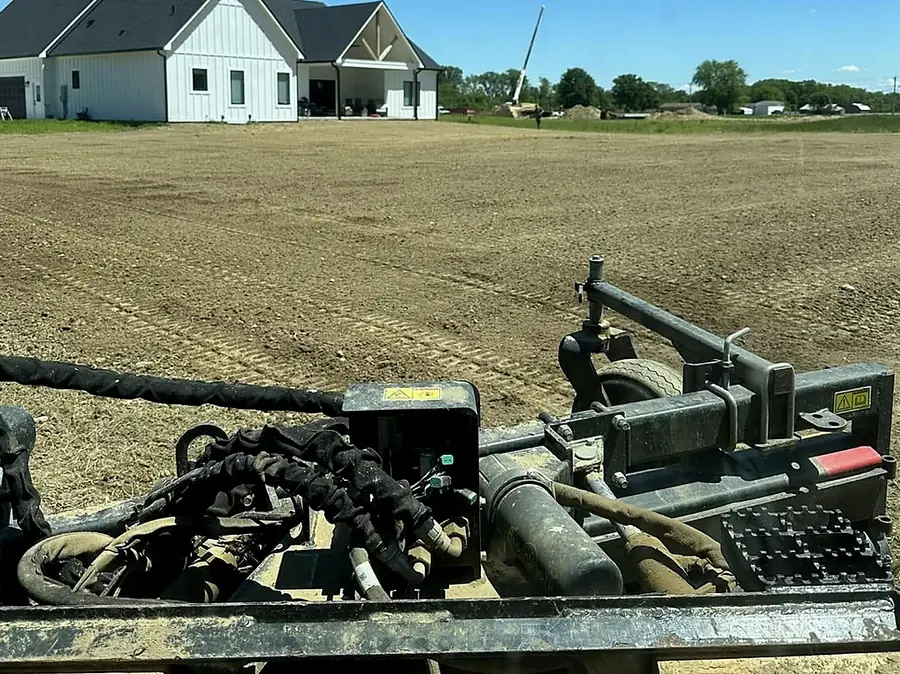
Why the two stages are separate
They are split because everything else happens in between. After rough grading come the foundation, backfill, utility trenches, the drive base, and every truck and machine on the job. All of that disturbs the surface. Spreading topsoil before the trades are done just means doing it twice.
There is also a practical reason. Topsoil is the layer that grows grass, and it is worth protecting. Kept in a pile during the build, it stays out of the way of traffic and compaction and goes back on loose at the end. Buried under fill or driven over for months, it is lost.
Tolerance and drainage
The difference in tolerance is the easiest way to tell the stages apart. Rough grade gets close. Finish grade is the surface you live with, so it has to be right: no low spot by the patio, no bird bath in the middle of the lawn, and a clear fall away from the foundation on every side.
On the flat clay ground across much of central Indiana that fall matters more than it looks. Water moves slowly on gentle slopes and soaks slowly into clay, so small mistakes show up as wet patches that last for days. A good finish grade follows the drainage plan set at the rough grade stage, not a fresh guess. For yard-scale problems see the yard grading and drainage guide.
Weather, timing and seed
Both stages need workable ground. Wet clay smears and seals, and Purdue Extension warns against tilling soil that is wet because it clods. Rough grading can often run through dry spells in most seasons, but finish grading is worth timing to the seed.
Purdue Extension puts the optimum window for seeding cool-season lawns in Indiana in late summer to early fall, slightly earlier in the northern half of the state. Finish grade in July or August and the seed goes down at the right time. Finish grade in late fall, and the soil usually needs straw or a temporary cover to hold until it can be seeded. The seeding after grading guide covers what happens next.
The Short Version
- Rough grading shapes subsoil to near-final levels early in the job.
- Finish grading spreads saved topsoil to the exact final surface at the end.
- The trades in between are why the stages are split.
- Finish grade follows the drainage plan set at rough grade.
- Time finish grading to the late summer and early fall seeding window where you can.
Quick Answers
Is finish grading included with rough grading?
Not always. On some jobs one contractor does both; on others the rough grade is part of the site work contract and finish grading is priced separately at the end. Ask what each quote includes, especially topsoil spreading and seeding.
Can I skip rough grading on a small project?
On a yard regrade or a small addition there may be little to rough grade, and the two stages run together. On a new house, skipping it means the pad, drive and swales are never set properly, and finish grading cannot make up for that.
Who does finish grading after a new build in Indiana?
Usually the site contractor, sometimes a landscaper. On Grade does finish grading, topsoil, seed and straw after builds across Putnam County, Indiana, Hendricks and Boone counties. Call (317) 203-8928.
How smooth should a finish grade be?
Smooth enough to mow without scalping, with no pockets that hold water, and with a steady fall away from the house. Small stones and clods are raked out, and the surface is firm enough that a footprint does not sink deep.
See the seeding & restoration service or call (317) 203-8928.