

Commercial Snow Plowing for Parking Lots
A parking lot gets plowed in an order: entrances and drive lanes first so traffic can move, then the parking rows, then docks and the back of the building. On Grade plows commercial lots, church lots, HOA drives and industrial yards from Greencastle to the west side of Indianapolis. The piles go where the site map says, and the curbs and islands are marked before the snow hides them.
- Free estimates
- Based in Greencastle, Indiana
- Residential and commercial
Parking lot snow removal, in order
Entrances and drive lanes first
The first pass opens the way in and out. Entrances off the road, the main drive lanes and the fire lane get cleared before anything else, so staff, deliveries and fire trucks can move even if the parking rows are still being worked. Then the rows are pushed toward the pile areas, working with the slope of the lot where possible so the plow is not fighting the grade. Accessible spaces and the paths from them to the door are cleared clean, not left with a thin layer.
During a long storm the lot may be opened more than once. An early push keeps the snow from packing down under traffic, which is what turns a soft snow into a hard, rutted layer that no plow lifts cleanly. How many pushes a storm gets, and whether they are billed one at a time, depends on the contract. See commercial snow removal contracts for the options.
Loading docks and truck areas
Docks are slow work and they matter more than the size of the area suggests. A truck that cannot back to the door costs a business a lot more than a few unplowed spaces. Snow is pulled out of the dock well and away from the door rather than pushed into it, and the apron in front of the docks is kept flat so trailers sit level. The skid steer is the right machine for this, because it can work tight against a building and a dock plate.
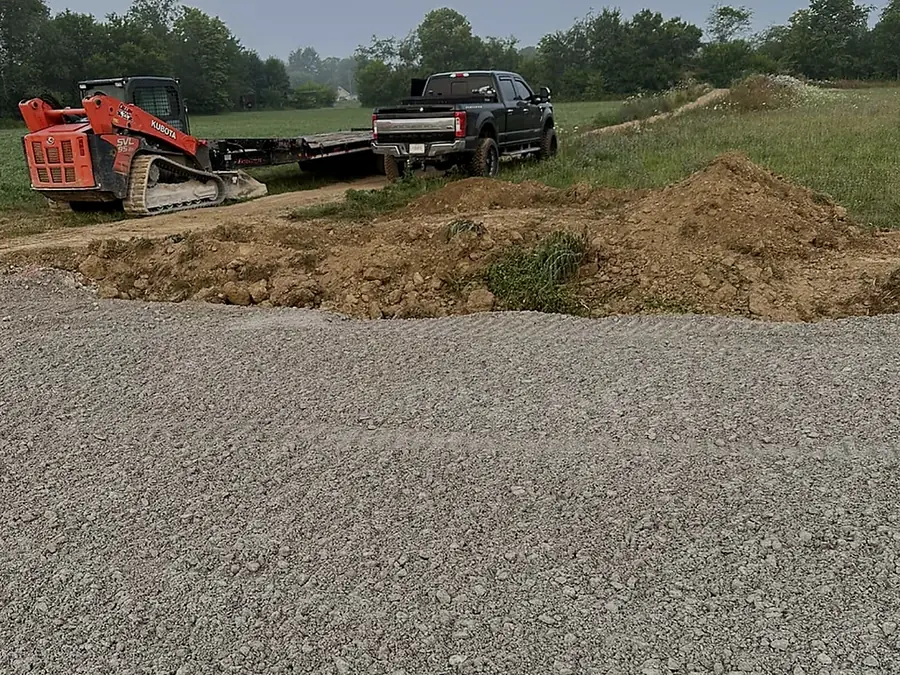
Truck courts and industrial yards need wide turning room more than clean pavement. The drive lanes get cleared to their full width so a tractor-trailer can swing without dragging a trailer wheel into a pile. Gravel yards are plowed with the blade set a little high so the stone stays where it is. On Grade builds stone yards and aprons, so that part of the job gets the attention it needs.
Where the piles go
Every lot needs somewhere to put a winter's worth of snow, and the wrong place causes problems all season. Piles on top of a storm drain block it, so meltwater spreads across the lot and refreezes overnight. Piles at an entrance block the view of oncoming traffic. Piles on landscaped islands crush shrubs and leave salt and grit in the beds. Piles against a building wall send meltwater toward the foundation and the doors.
The usual answer is a corner or an edge on the low side of the lot, away from drains and walkways, where meltwater drains off the pavement rather than across it. Those areas go on the site map before the season. When they fill, the choice is to stack the piles higher with the skid steer or haul them off. Snow hauling and relocation covers both.
Marked before the season
Under a few inches of snow a lot is a flat white field. The curbs, islands, light pole bases, wheel stops, speed bumps, hydrants and drains are all still there, and a plow blade finds them the hard way. So before the ground freezes, Travis walks the lot and marks each one with a tall stake that stands above the snow. Edges where pavement meets turf get marked too, so the plow stays off the grass.
That walk is also when existing damage gets photographed: curbs already broken, cracked pavement and ruts in the turf from last winter or from a delivery truck. The owner and On Grade both have the photographs. It keeps the spring walk-around fair, and it gives the plow operator a clear picture of the site before the first night of work.
Salt, walks and what follows
Plowing leaves a thin layer on the pavement that traffic packs and a cold night turns to ice. That is why most commercial lots get salt after the plow, and often before the storm if freezing rain is in the forecast. Salting and ice management explains how it is timed, and why the refreeze after a sunny afternoon causes as much trouble as the storm did. Salt is logged with each visit.
The walks from the lot to the doors are a separate job done by hand and with smaller equipment, and they are usually part of the same visit. The sidewalk snow removal page covers entrances, steps, ramps and frontage. The site map shows both, so the lot and the walks get cleared on one plan. On a church or office lot, the walks are often the part people notice first.
Snow Removal and Plowing
Plowing, salting, hauling and sidewalks for homes and businesses from Greencastle to the west side of Indianapolis.
See the pageTalk to Travis(317) 203-8928
Call or text the address and what needs clearing: a lot, a drive, walks or all three. Travis sets the route and the terms with you before the first snow.
Call nowWhat that covers
- Parking rows. Pushed to the pile areas set on the site map.
- Drive lanes and entrances. Opened first so traffic, deliveries and fire access can move.
- Loading docks. Snow pulled out of the dock well and away from the doors.
- Truck courts and yards. Cleared to full width for turning trailers, stone yards included.
- Pre-season marking. Curbs, islands, poles, drains and edges staked before the freeze.
Snow Removal and Plowing
Plowing, salting, hauling and sidewalks for homes and businesses from Greencastle to the west side of Indianapolis.
See the pageSnow serviceCommercial Snow Removal Contracts
Seasonal, per-push, per-event and time-and-materials snow contracts, written and signed before the first storm.
See the pageSnow serviceDriveway Snow Plowing
House drives, long gravel drives, private lanes and subdivision drives, plowed per push or by the season.
See the pageSnow serviceSalting and Ice Management
Pre-treating before freezing rain, salting after the plow, and going back out when meltwater refreezes.
See the pageSnow serviceSidewalk Snow Removal
Walks, entrances, steps, ramps and business frontage cleared and treated on the same visit as the lot.
See the pageCommercial plowing <span class="gt">near you</span>
On Grade plows commercial lots in Putnam, Hendricks and Boone counties and on the west side of Indianapolis, from retail strips and church lots to industrial yards along the interstates. There is a town page for snow removal in Brownsburg with local detail, and all snow services are on the snow removal and plowing page.
Set up before the first snow.
You call
Call, text or send the form with the address and what needs clearing: a lot, a drive, walks, or all of it.
Travis walks it
Before the season he walks the property with you, marks curbs, drains and islands, and agrees where the snow goes.
Terms in writing
Seasonal, per push or per event, the trigger, salt and walks are written down, so nobody argues at five in the morning.
Cleared when it falls
When it snows, the property is worked in the order agreed, salted if it is in the contract, and logged.
The machines and the crew.
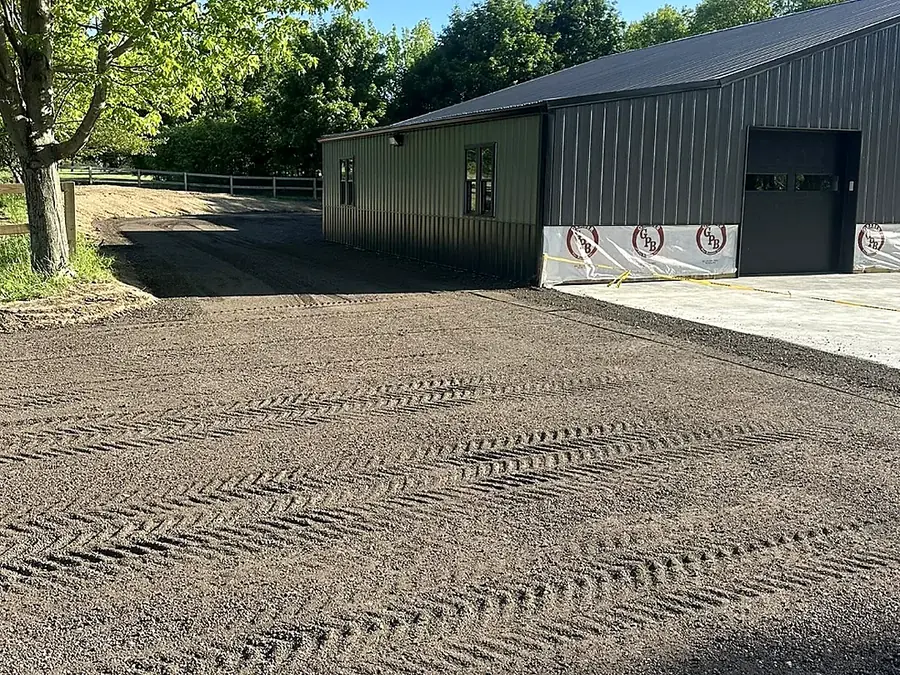
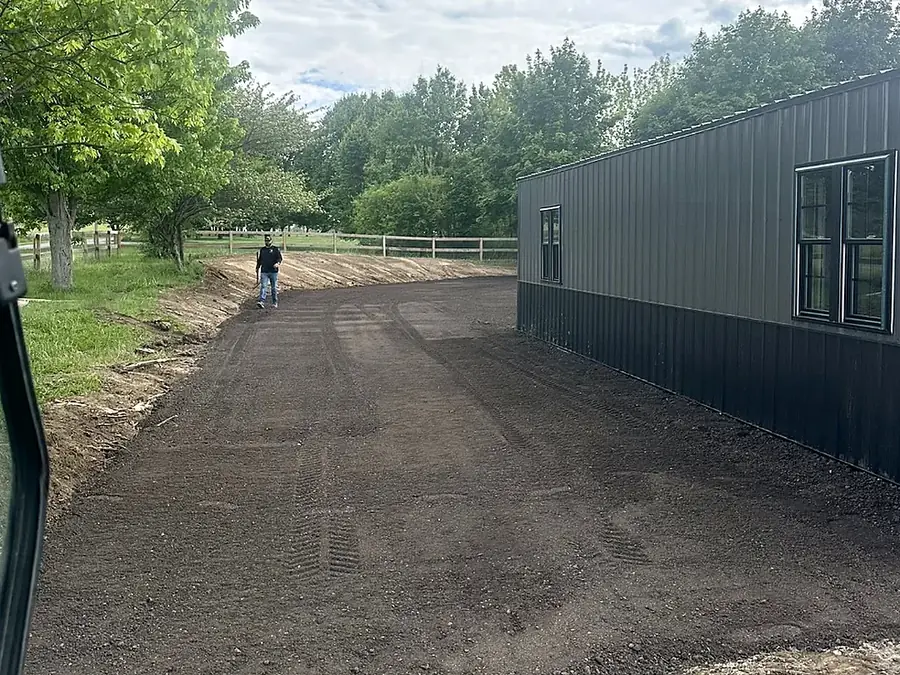
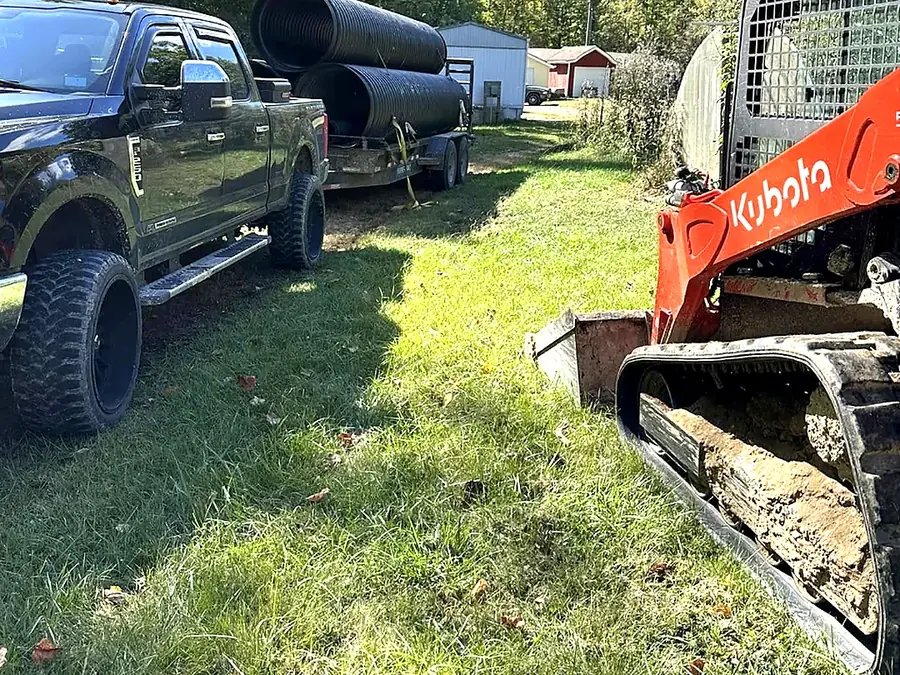
These are photographs from Travis's actual jobs: the same equipment and the same crew that run the snow routes. See more recent work.
Questions people ask
Not seeing yours? Call (317) 203-8928 and ask Travis, or read the guides.
What time will my lot be plowed?
That depends on the trigger depth, when the snow falls and where the site sits on the route, which is set in the contract. A retail lot that opens early, a church with a Sunday service and an industrial yard that runs around the clock all need different timing. Tell Travis when the lot has to be open, and the route is planned around it.
Do you stack piles on the lot or haul them away?
Both, depending on room. Most lots have a corner or edge where snow can be stacked, and the skid steer can push piles higher to make space. When a lot runs out of room after a big storm or a long winter, the piles can be loaded and trucked off. The contract should say whether hauling is included or billed separately.
Who pays if the plow damages a curb?
That is what the pre-season walk-through is for. Existing damage is photographed before winter, and curbs and islands are marked with stakes so the plow can find them. Damage that happens over the season can then be told apart from damage that was already there. The contract should say how damage gets reported and how it gets settled.
Can you plow a gravel lot or stone yard?
Yes. Stone lots and yards are plowed with the blade set a little above the surface so the stone stays put, leaving a thin packed layer of snow. That is easier once the ground has frozen. On Grade builds gravel drives, aprons and pads, so the work is done with an eye on keeping the stone where it belongs.
Do you plow church lots and HOA common areas?
Yes. Church lots are planned around the service schedule, so the lot and the walks are open before people arrive. HOA common areas usually include entrances, common drives, mailbox areas and clubhouse lots, with the board signing one agreement. Public streets inside a subdivision are generally plowed by the town or county, while private streets belong to the HOA.
Other work he takes on
Most jobs end up being two or three of these at once, and they get quoted together.
Snow removal in other towns
Excavation & Site Prep
Sites stripped, cut and graded, ready for the builder.
Learn moreFoundation & Basement Excavation
Basements, crawl spaces and footings dug to grade and backfilled.
Learn moreDrainage, Culverts & Utilities
Water moved off yards and away from foundations; culverts and service lines set.
Learn moreDriveways & Finish Grading
Gravel drives built and crowned; yards finish graded for seed.
Learn moreLand Clearing & Forestry Mulching
Lots and acreage cleared, brush mulched in place.
Learn moreBuilding & Pole Barn Pads
Pads cut, filled and compacted for barns, shops and houses.
Learn moreFree parking lot plowing estimate.
Call or text Travis. Snow contracts and one-off plowing, set up before the first snow.
Greencastle, Indiana · Putnam, Hendricks, Boone and Marion counties
Snow removal where you are
Each town has its own page: what winter does there, what gets plowed and how the contracts are set up.
Need your parking lot plowed?
Call Travis at (317) 203-8928 to walk the lot and set it up before the freeze.